Indian innovators develop AI and wearable technology for healthcare access
Young Indian innovators are creating technology-driven healthcare solutions, including AI-powered eye screening and wearable devices for arthritis patients, to enhance accessibility and convenience.
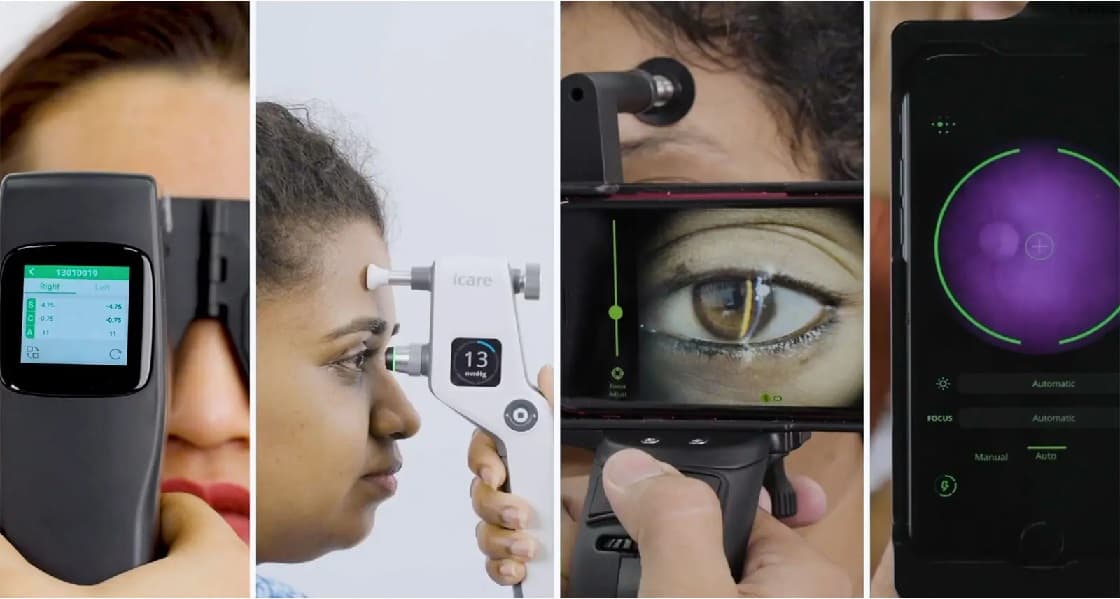
Bengaluru-based deep-tech startup Remidio has developed a portable retinal imaging device that uses a smartphone and artificial intelligence (AI) to detect eye conditions such as glaucoma and diabetic eye disease. The company is also investigating the use of retinal scans to identify risk factors for cardiovascular diseases and chronic kidney disease.
“Our objective at Remidio is to prevent avoidable blindness. We are also using AI to explore how the eyes can serve as a window into other diseases within the body,” said Anand, founder of Remidio. The device employs a patented annular illumination system to capture retinal images without the need for pupil-dilating medication.
“Our patented technology has enabled us to develop a system that does not require a large area for illumination. Our fundus camera also eliminates the need for medically dilating the patient’s pupils,” said Wilson D’Souza, chief operating officer of Remidio.
In a separate development, FlexiRelief SmartCare, a health-tech startup supported by the IIT Jodhpur incubation ecosystem, has designed a smart glove and wearable band that provide heat and vibration therapy to assist arthritis patients in managing joint pain and stiffness.
“Our initial vision was to develop a solution for the hand joints of rheumatoid arthritis patients, who struggle with morning stiffness that can last for one to two hours. We have designed our product around their needs, and our future vision is to develop solutions for knee joints as well,” stated Vijay Kumar, founder of FlexiRelief SmartCare.
The wearable device connects to a smartphone application via Bluetooth, enabling users to select various operating modes and adjust settings.
“The device uses a microcontroller that can connect to the phone via Bluetooth Low Energy. Through our mobile application, users can easily control the device and operate it in different modes,” said Bhanu Pratap Singh Chauhan, product development lead for medical devices at the startup.
These innovations illustrate how young Indian developers are applying AI, portable imaging, and smart wearable technology to create more patient-focused and accessible healthcare solutions. Their clinical efficacy and wider application will require thorough validation and assessment.